

A Family Vacation in the Den of Brazil's Drug Cartel
If the way to heaven is apocalyptic, we were driving to the end of the world.

“The backlands man is, above all, strong.”
— Euclides da Cunha, Rebellion in the Backlands
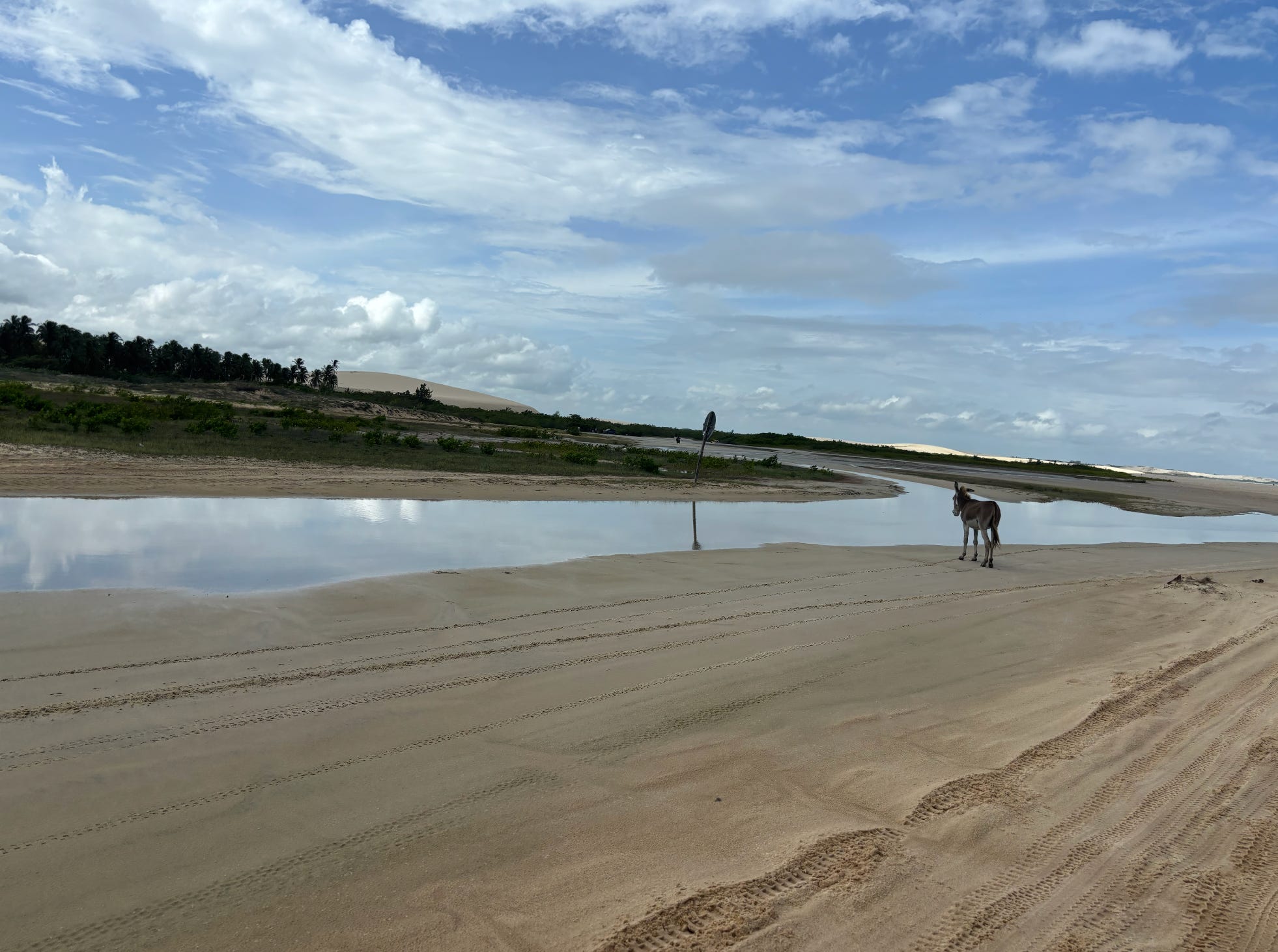
I was sleeping under a mosquito net in Brazil for the last two weeks. We were in a region I never visited before, on the edge of a national reserve in the Northeastern end of Ceará. Think of South America’s Atlantic coast before Europeans arrived: wild donkeys grazing in green patches between the sea and the sand dunes, black vultures chewing on the remains of a sting ray washed onto the beach, salt water lakes glimmering after high tide, and mangroves covered in crabs and sea horses.
After two airplanes and half a day in the car we landed in a stilt house complex in front of the sea. During the last hour of our trip we crossed a narrow river on a jangada1 and nearly 15 kilometers of sand. We watched our driver contour the dunes to find dry paths where the car could pass without digging its wheels into wet sand. We saw tourists ride buggies2 to the top of golden hills to watch the sun set over the Atlantic.
If the way to heaven is apocalyptic, we were driving to the end of the world. Our journey revealed the most paradoxical nature; a land where grass sprouts from the sand, trees grow sideways, and fish swim between fresh water rivers and the sea. The dunes separate the village from the nearest bank and visitors are spared none of the quirks of this isolation; a possum visited our room each night to steal apples, and on one afternoon, a giant cave cockroach landed on my daughter’s face.
The village, built on sand, feels as lawless as the American frontier in an old Western. We can enter town through the beach by way of two main roads; a path on the northern end or a central street marked by a row of cocktail carts. Both are busy with restaurants, food vendors, and hippies selling jewelry. Every inch of real estate is accounted for here, including in the alleyways that connect the main streets to each other. There are no street lamps, people rely on the moonlight to see where they’re going, and when it rains, excess rainwater floods the sandy roads and disgorges onto the sea. Water cascades from the main streets and through the alleys at a speed so high it’s impossible to walk until the storm settles and the water drains completely. Several times, during the day and at night, we tried to follow the main road to the opposite end of town, but found ourselves walking into an abyss. It was the most uncanny sensation, and we decided to limit our circulation to the proposed network.
Here, time had either stopped a long time ago or was wildly ahead. Something had turned this community against the present. There were no newspapers, no magazines, no banks, no institutions, no post office. The main timekeepers were a lottery house and a very kind old man exchanging crossword puzzles for charity donations. I wanted to perceive this place as a modern hinterland where ordinary people live in a bewildering desert, a place of repose with unexpected quirks and phenomenons of nature, but everything we looked upon felt like a pastiche of different times. It was unsettling, as if we were vacationing inside a parallel, dystopic world where the order of things was being kept from us.
We couldn’t find any signs to reveal the way this reality was organized. The only remnants of history were an abandoned catholic church, dry boats anchored on the beach, and elderly women passing town with baskets full of fruit—we were told they once crossed town bearing fresh fish. We encountered zero policemen, yet it’s the safest I ever felt in Brazil. I wore jewelry, we carried all our money in our wallets and consistently forgot our documents tossed around our beds. It was nothing like taking my family to Rio. The community wanted us to trust them, to believe in their goodwill, yet there was nothing upholding their behavior and guaranteeing our safety. The moral systems that ensure ethical behavior elsewhere, aren’t the same as the ones sustaining this village. People are autonomous. They fend for themselves, raise families with their own codes of conduct. Some children go to school, others play at the beach, and several are already working. They have a different sense of duty, they act free from rules, yet there’s still some sort of social order in governance.
One of the only instances when I was able to break through to someone, go past this immediate need they have to portray goodwill, was with the manicurist in my room, and it was accidental. First she asked me if I was really Brazilian, I didn’t answer. I asked her to stop calling me patroa, which is Portuguese for a lady boss, and offered her a coffee. It was as if this short interaction was a silent agreement for her. What ensued were two hours of pure talking, she was a gossip magazine, my very own marker of time. She told me about Virginia’s affair with Vinny Jr., about the cast in Big Brother Brasil 26, about the commission the hotel charges on her pay, about the Brazilian women staying in this room during Carnaval. She asked me about television in France and if my husband was helpful with my child. Then she started going on about the helicopter that flew a man to Fortaleza after he broke his dick with a prostitute. I was in disbelief, not at the story but at the crude language, at the importance she gave this news and how normal it felt to her. I thought she was talking about the kind of gossip that comes from those distant relatives in another city. It was only when I realized it took place at the luxury hotel down the street from us that all lightness lost its humor. His escort was so embarrassed she flew back to São Paulo without her belongings, she laughed. And then she revealed more: there’s always something going on there, the owner was running for mayor but the feds came knocking and he dropped out of the race. After she left I looked at my nails and thought, there’s great fear in feeling too safe.
Brazilians have grown used to life under the shadow of an unjust government incapable of providing hope. The teenagers gathered by the cocktail carts each night didn’t frighten me. I discarded any threatening thoughts as inherited paranoia and continued to live with my guard down. Even when one of the teenage boys walked past us with his leg covered and stained with blood, I didn’t question our safety. I only decided to poke around the day we saw three teenagers sprint up the main road in tantalizing speed with panic in their eyes. Not because of them, but because when it happened everyone around us carried on with their business, acted as if it didn’t happen. Had my husband not seen it too, I would’ve thought I fabricated this sprint. People around us looked like zombies, they looked possessed, they were paralyzed. It was so strange, were we the only ones not under this spell?
The hippies, the business owners, the women selling lace tablecloths and dresses, they all brushed off my roundabout questions. I knew then that something was at play, they had closed the curtains but forgot to cover the gap. We could step into their reality now, into the dimension where order was operating. After the alarm cleared, and a sense of normalcy returned to the minds of the people, I started poking around again. Finally someone agreed to answer by discreetly guiding my eyes to the “CV” initials painted in red on the wall. When we were walking back to our room we noticed them everywhere, they stand for Comando Vermelho or in English, Red Command. And then it hit me: we were vacationing in the den of one of Brazil’s largest factions.
If once Brazilians associated criminal factions with urban city centers, the Red Command with Rio de Janeiro, now we were starting to do so with small coastal towns. What was once a fisherman village ruled by nature is now governed by the Red Command, the nation’s largest drug cartel. The Red Command isn’t just at war against the police, it’s at war for expansion. The Northeast’s proximity to the United States makes drug transportation by sea easier and quicker. To the townspeople, living here means that even petty crimes fall under the delegation of this faction. Robberies aren’t solved by the police force but by kids responsible for maintaining order in the affiliate. If you rob once you’re warned, twice you’re disciplined, three times, you’re dead. Only three weeks ago a local addict was murdered in the dunes. There’s only one system governing this society’s behavior, it’s the death penalty.
Between lunch and dinner tourists usually have coffee and a snack at the dessert shop in one of the alleys. They brew the best coffee in town and their desserts are delicious. My daughter’s mouth watered for the different brigadeiros3 displayed on their glass vitrine. The hubbub inside often encourages strangers to interact. I had my Brazilian identity questioned there almost every day. At times people told me point blank after I ordered that they’d never imagine I was from Brazil. On one instance a teenager pointed out to her father that we were French, and when they made a kind remark about my daughter and I replied gratefully in Portuguese, they were in complete disbelief—jaws dropped to the ground. So it was in this environment, in this crowded shop that we saw Brazilians, Americans, Germans, and French tourists come together. It was also the first place where we heard people speak Hebrew.
As our trip carried on, we noticed more and more people speaking Hebrew and concluded it was a popular holiday spot for Israelis too. When we ate lunch at the sandwich shop in the north part of town, there were several Israeli kids in their twenties sitting at the table smoking weed, eating sandwiches and açai bowls around us, and although the menu on the counter was written in Portuguese, there was a white board propped up on the corner with a tiny drawing of the Israeli flag, followed by something written in Hebrew. Before I could point it out to my husband, a local woman with a small child asked me to purchase a bracelet so she could buy a slice of cake at the shop for her daughter. As I reached for the change I made at the counter, shuffling the coins to make sure I had enough for a slice, I asked the man what the sign read. It offered a ten percent discount to Israeli customers.
As if this village had not already portrayed to us a condensed image of Brazilian narco-politics, it was also bringing center stage questions about global political alliances.
Later, when we were driving to the airport, I asked our driver about the man who owns the sandwich shop. As it turns out, when young Israeli soldiers finish military service, the Israeli government offers them paid holidays in this village. They pay for their flights and lodging, the kids are responsible only for what they eat.
The day we visited the sandwich shop was February 29, the day after Israel and the U.S. attacked Iran. I’m still left trying to discern why America’s greatest ally, with the most advanced intelligence agency in the world, is sending soldiers on R & R to this village. I think we can all stipulate the same answer to this question.
Something about leaving this place tells me I’m not leaving the haven I thought I was coming to visit. I’m relieved to no longer be under the governance of the Red Command, yet this freedom is obviously just an illusion.
As an expatriated Brazilian, I feel responsible for their supplication for help and guilty for my uselessness. On two occasions married men with children confided in us their hope to escape this country and take their families abroad. It’s not that they’re not proud to be Brazilian, but they understood they’ve been neglected by their own people; by the government, the rich, and their neighbors. The desperation in their discourse is brutal to hear, disturbing to witness, and real: their only hope is another system altogether, because this one oppresses them and keeps them from the basic right which should be owed to each human: freedom. It’s incredibly naive for me to say this, but I wish I could help them. In a community this desolate, it’s too easy to foresee the catastrophic atrocities to come, the moral sacrifices the innocent will have to continue making to survive. A fine line keeps their tomorrow from an apocalypse of biblical proportions, and the threat is so imminent I can smell the bloodshed, hear the massacre all the way from my bedroom in France.
Book and Film Recommendations
What follows is a compilation of the works that came to mind while I was in this village and thinking about telling this story. It is in no way an extensive research of the works around the themes I address in this piece, it’s simply what came to mind in my feelings.
Books
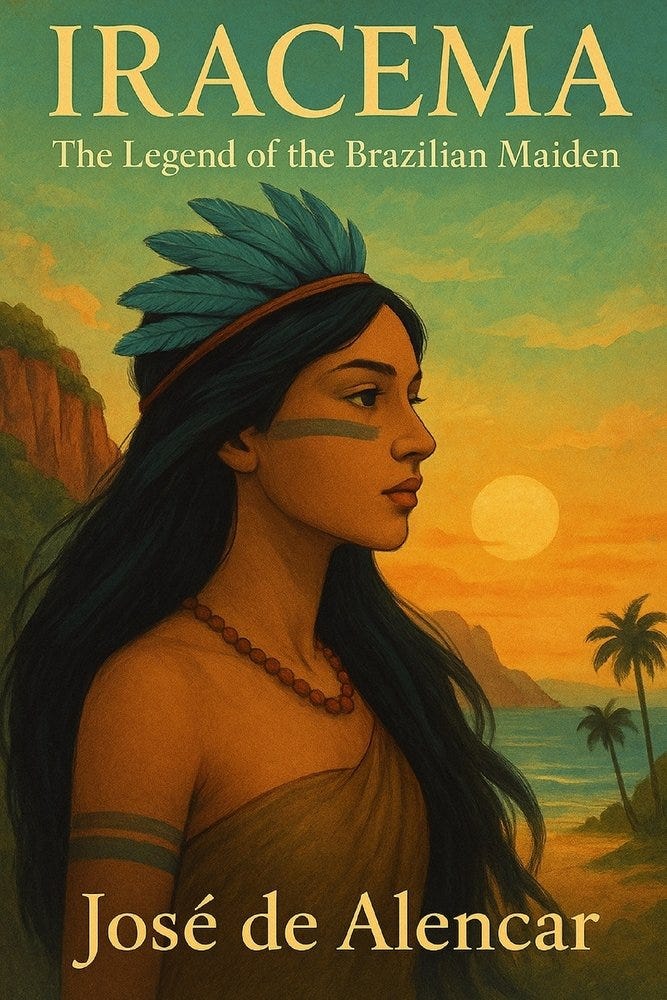
Iracema by José de Alencar (1865)
Iracema is a classic in Brazilian literature, and tells of the mythical birth of Ceará. The protagonist, a native Brazilian woman named Iracema, has since become an important symbol in Brazil’s mythological history. José de Alencar was born in Ceará and is until this day one of Brazil’s most important literary figures. Read
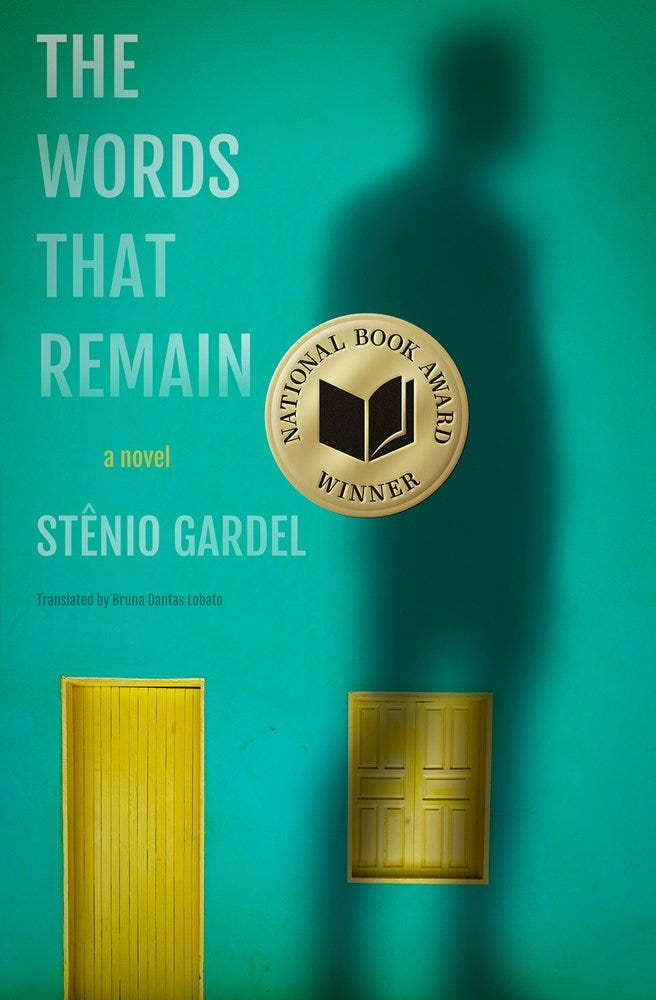
The Words That Remain by Stênio Gardel (2024)
Winner of the 2023 National Book Award for Translated Literature this novel tells the story of an illiterate homosexual man who decides to learn to read and write at 71 to read the letter from the man he encountered in his youth, and was prohibited to see after his father discovered their sexual relationship. The story takes place in Ceará. Read
Films
Black God, White Devil (1964)
A Revisionist Western directed by Glauber Rocha in Bahia. It was nominated for an Oscar as a foreign language feature. It tells the story of an outlaw who joins a religious cult.
The Oyster and The Wind (1997)
A movie filmed in the village I described in Ceará. It was directed by Walter Lima Jr. and based on a novel by Moacir C. Lopes. It premiered at the Venice Film Festival and competed for the main prize. One of the main actors in the film was Fernando Torres, the father of Fernanda Torres who was nominated for an Oscar last year for her role in the Brazilian film “I’m Still Here” by Walter Salles.
Bacurau (2019)
A Brazilian surrealist movie directed by Kleber Mendonça Filho that takes place in a small town called Bacurau in the Brazilian sertão. In 2019, it won the Jury Prize at the Cannes Film Festival.
A jangada is a raft made of logs of light wood used by fishermen along the northeast coast of Brazil, it’s one of the main symbols of the state of Ceará.
Buggies are smalls cars usually with no roof. We also saw 4-wheelers and 4x4 Toyotas in the dunes, but it was more common to see people getting around on a buggy.
Brigadeiro is a traditional Brazilian dessert made from condensed milk. It has a chewy, caramel-like texture and is often rolled into three-inch circular balls and covered in sprinkles.