

The Anxiety of Catching Words
Plus essays by Anne Carson, Flannery O'Connor, and Olivia Laing.

In this week’s newsletter: I respond to an inquiry about Hilda Hilst, plus an essay by Anne Carson, another by Flannery O’Connor, and some of the best articles I read this week including an excerpt in Harper’s Magazine from Simon Paré-Poupart’s newly translated memoir Trash! A Garbageman’s Story.
CHRONICLE
The Anxiety of Catching Words
It was so hot in my apartment I took the day off. In the morning, while I was biking around Paris, I caught myself writing in my head. I was writing full sentences, they were meticulously constructed, but the minute I tried to record them I lost all of their beauty. Like that, they were gone. I forgot all the small details that turned them from nothing into something needed. It all happened so quick, I had one second to catch it. This is why I have a hard time leaving my house, because I know I can miss it, that I will miss it and never get it back. Or maybe I’ll find it again, I don’t know. What I do know is that if I sit at home for too many weeks at a time nothing comes to me. I forget I’m a writer, it’s as if I’m not a writer unless I’m actually writing, and the moment it’s done I’m back to being me, someone else entirely.
This morning when I tried to listen to the recording all I could hear was the noise of the electric bike accelerating. I’ve never been one to carry a notebook around. I know a lot of people, writers and non-writers, who jot down plenty of things they think about during the day. By the time I open an app, or a notebook (find a pen), everything already feels too distant for me, the emotion that stirred me up is gone and I’m left with a weird feeling of grief, of longing for whatever it was that I lost in that moment, something I can’t even describe. To try to write what I lost would be to birth a stillborn sentence.
There are times when I do catch it, when I write something after endless hours of looking at nothing. It comes suddenly, it unsettles me, and if I’m lucky enough to be at nothing I can grab it. When I lived in Los Angeles and an earthquake hit I was relieved if I happened to be driving. There was something about already being in motion, I was ready to be shook.
When I do write, I’m always surprised and always worried it won’t happen again. Because there’s no formula, no manual, no one person that can show me how to use my hands fast enough. Clarice Lispector said she was a one-handed woman. I don’t even use my hand, everything exists at my fingertips. To write today we have to concede to our handicap in this world.
VISUAL LIBRARY


TOP SHELF: ADDED TO THE PILES
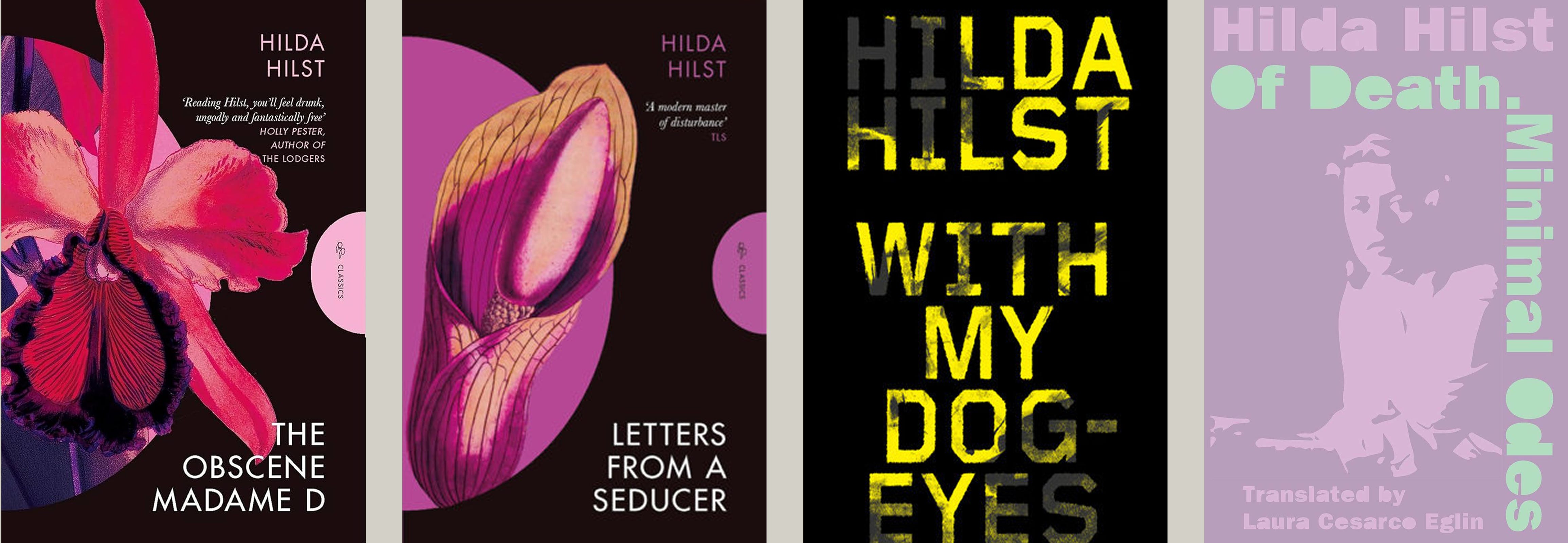
Last week someone asked me what I think of the Brazilian writer Hilda Hilst. I believe she’s one of Brazil’s greatest writers and that her English translations were buried under Clarice Lispector’s revival (they were translated around the same time).
The first time I came across Hilst’s work was in middle school when a Portuguese teacher assigned The Obscene Madame D (1982), her most famous novel and in my opinion, the most important reflection of her style (she was heavily influenced by James Joyce’s Ulysses). It was out of the ordinary, it was serious, it confronted a conservative society, dealt with questions of existence, divinity, faith, death, human mediocrity, the body, the metaphysical. These were themes she broached in all of her work, I find she expresses herself with precision in this text. To read Hilst is to overcome our own pretensions.
After publishing more than 20 plays, poetry collections, and novels, Hilst grew frustrated with the publishing industry’s disregard for her serious writing. She found, more often than not, her novels (including The Obscene Madame D) were poorly distributed and read: “If there’s not distribution, there are no sales,” she said. In 1990, unsatisfied with the circulation of her titles, Hilst published the first in a trilogy of pornographic novels intended to provoke publishers and the editorial market. It was an act of defiance, a shout at society that made literary history in Brazil. “Writers desire to be read…I hope this time they read me in a capsule, in the train, in the airplane, and in the bathrooms too,” she said. The books were extremely provocative, they were met with controversy in a society that had only seen an end to the military dictatorship five years prior. Critics and readers alike said she had gone crazy, how dare a woman write a novel like this, it was deemed vulgar and repugnant, many called it trash. Hilst conceded with irony to the comments: “I hope to become an excellent pornographer…it seems that this editors really like…and if you become considerably repugnant, the other will start to desire the nostalgia of sanctification.”
Above are the works translated to English, including the only poetry collection Of Death. Minimal Odes, translated by Laura Cesarco Eglin in 2019, preceded by the second work in the pornographic trilogy Letters From a Seducer (1991), and the novel With My Dog Eyes (1986). I will be revisiting them in Portuguese.
To the friend who reminded me of Hilda Hilst, thank you.
A VIDEO
A brief look at Hilda Hilst’s countryside home Casa do Sol, where she wrote most of her poetry and prose. Her isolated life in this home might have been what kept her from being persecuted during the military dictatorship. She turned the house into an informal artist residency for her friends, who often stayed to work for long periods of time. This is her voice.
ESSAYS I RECOMMEND THIS WEEK
On Imitation by William Hazlitt. Read
On Prophesying by Dreams by Aristotle. Read
Decreation by Anne Carson. Read
The Magic Box by Olivia Laing. Read
The Fiction Writer and His Country by Flannery O’Connor. Read
ARTICLES I READ THIS WEEK
For The Paris Review, Lidija Haas interviews Harriet Clark, author of The Hill. They discuss the novel and the twenty years it took her to write it. Read
Mary Ruefle says that she used to think she kept writing because she hadn’t yet said what she wanted to say, “but I know now I continue to write because I have not yet heard what I have been listening to.” For some of us, it takes so long to hear what you’ve been listening to—and it’s meaningful to give yourself all the time you need.
Fitzcarraldo released a print edition with Edward W. Said’s famous lectures Representations of the Intellectual. Said delivered these six lectures for the BBC in 1993. Ryan Ruby takes a closer look in BookForum. Read
Representations is an excellent introduction to the rest of Said’s work, especially for those who know it only through the syllabus staple Orientalism, where he is at his most polemical, or only by reputation, which has always been subject to bad-faith distortions, caricatures, and simplification. Those who think of Said as the American representative of French theory may be surprised to discover that his prose in Representations is impeccably clear and free from specialist jargon, the constraints of the radio format requiring him to be “precise, accessible, and as economical as possible.” Others, who are aware that one of his important accomplishments was to help introduce political context—particularly the imperial context—into the study of nineteenth-century European literature then dominated by apolitical, formalist methods, may be surprised to hear him say that although his readings are “spurred by commitments that go beyond his professional career,” he never introduces these “in the classroom.” Yet others, who associate postcolonial studies, the discipline he helped found, with cultural relativism, may be surprised to find him arguing in Representations for a far more subtle position, in which attention to “the local, the subjective, the here and now” is balanced against the need to “uphold a single and universal standard” for judgments of human behavior, especially where these concerned “freedom and justice.”
Harper’s Magazine published an excerpt from Simon Paré-Poupart’s newly translated memoir Trash! A Garbageman’s Story, where the archaeologist recounts his time working as a garbageman in Canada. Read
Our Warming Planet Is a Petri Dish for New and Deadly Microbes: for the New Yorker, Shayla Love writes about how bacteria and fungi are evolving in our bodies. Read
“The End of Books: What happened when a dumpster arrived behind my university’s library” an essay by Sheila Liming for The Yale Review. Read
Last but not least, I am addicted to Spencer Pratt’s mayoral race campaign on social media. If you don’t have a clue about what I’m talking about, the New York Times has got you covered. Read
CURRENTLY AT RUE DE CHABROL
My Morning Read
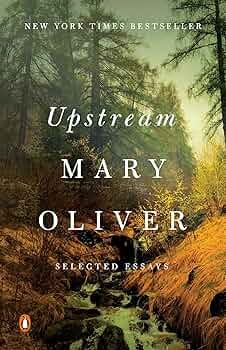
I was at Shakespeare & Co. looking through the nonfiction section and this book caught my eyes. The essays that sealed the deal for me were My Friend Walt Whitman and Emerson: An Introduction, the latter quoted below:
The best use of literature bends not toward the narrow and the absolute but to the extravagant and the possible. Answers are no part of it; rather, it is the opinions, the rhapsodic persuasion, the engrafted logistics, the clues that are to the mind of the reader the possible keys to his own self-quarrels, his own predicament. This is the crux of Emerson, who does not advance straight ahead but wanders to all sides of an issue; who delivers suggestions with a kindly gesture—who opens doors and tell us to look at things for ourselves.
What My Husband’s Listening To
The song Aldeia de Ogum by Joyce Moreno and the album Warm Shadows by Memotone.
An Animated Series I’m Thinking About
Satoshi Kon’s Paranoia Agent.
A POEM
The Second Coming by William Yeats
Turning and turning in the widening gyre
The falcon cannot hear the falconer;
Things fall apart; the centre cannot hold;
Mere anarchy is loosed upon the world,
The blood-dimmed tide is loosed, and everywhere
The ceremony of innocence is drowned;
The best lack all conviction, while the worst
Are full of passionate intensity.

Surely some revelation is at hand;
Surely the Second Coming is at hand.
The Second Coming! Hardly are those words out
When a vast image out of Spiritus Mundi
Troubles my sight: somewhere in sands of the desert
A shape with lion body and the head of a man,
A gaze blank and pitiless as the sun,
Is moving its slow thighs, while all about it
Reel shadows of the indignant desert birds.
The darkness drops again; but now I know
That twenty centuries of stony sleep
Were vexed to nightmare by a rocking cradle,
And what rough beast, its hour come round at last,
Slouches towards Bethlehem to be born?
FWIW if anyone's looking for Hilst I believe you can still find translations of Letters From A Seducer, The Obscene Madame D and Fluxo-Floema from Nightboat books floating around. https://imgur.com/a/L4PGnXV There's also the Companhia Das Letras editions of the collected prose and verse which are very nice and still in print if you read Portugese. EDIT: Just checked, and those Nightboat editions are the same Nathanaël and Araujo translations. I thought they were very good.
I just finished Carson's "The Beauty of the Husband" which is crushingly, achingly gorgeous and extremely funny. Considering the Weil implications I'll have to do Decreation next. it's funny with all the attention to the Iliad and the Odyssey coming from Nolan and the (very good IMO) Watson translations, I reread Madeline Miller's Circe and Song of Achilles novels recently and was momentarily quite focused on Iphigenia, particularly the later interest in her from Aeschylus and Euripedes -- Merwin's Iphigenia at Aulis and Carson's Iphigenia Among the Taurians are fascinating to read alongside one another. I'm heading toward HD's Helen In Egypt next.
Would love to hear about your thoughts re: Paranoia Agent. And maybe if you have any opinion about Alejandra Pizarnik, who is the closest thing I have to a poetic lodestar.