

The Moment Was Always Someone Else’s
Plus David D. Kirkpatrick's reportage on Biden and the Middle East, a new Anne Carson poem, and John Berger's 1970s television series.

Welcome to Rue de Chabrol. In this week’s newsletter: several articles and essays I read this week including David D. Kirkpatrick’s reportage on Biden and the Middle East, T.S. Eliot’s preface to Simone Weil’s “The Need for Roots,” John Berger’s television series, and a new poem by Anne Carson. Plus a chronicle I wrote and the books I’m reading over summer break.

CHRONICLE
The Moment Was Always Someone Else’s
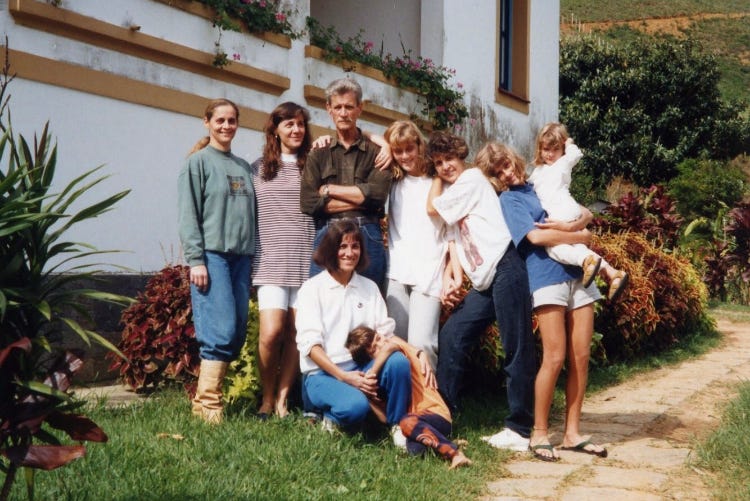
I remember him from the quiet afternoons at the farm when I was a child. The hallway was lit by a white, cloudy light that spilled from the bedroom doors onto its dark wooden floor. Those delicate steps I took to soothe the sound of the broken slabs until I arrived right there: at the small opening of his bedroom door. At that hour he was almost always there, weightless, sweet, calm. He lay in his bed thinking, or sat over a crossword magazine. He’d pause and turn to me, come here little doll. He’d get up, put his hands in the pockets of his high-waist trousers and from there hand me a caramel. That warm treat, filled with the memory of these moments, a time I always thought of as ours. He’d sit back down, ask me to kiss him on his prickly stubble. He’d hug me tight, very tight, and then he’d let me go, and on the bed he stayed, buttoned shirt, ironed pants, leather belt, boots, wool socks, his revolver resting next to him. Later he’d get up and move around the house to the edge of the staircase on the veranda. Hips pointed forward, back falling behind him, closed fists resting on his basin. From there, the moment was always someone else’s.
I didn’t have him like the others: I wasn’t the first nor the last, I was also not permanent. When thoughts of him come to me, they’re like this, short scenes I prolonged. Just like our encounters. They bring memories from intimate moments that shaped my demeanor, my understanding of silence and the importance of the time we spend alone.
He never left me. In the body I left him, always, but with this I learned how to keep him alive. And now, when he leaves us, I feel him in who I’ve become. Because we all have a little bit of him, from a different moment, it’s what proves our singular union. I say, the best way to feel him is to delight in the little bit we all find of him in others, and let this bit mature, with love, inside us.

VISUAL LIBRARY
Portraits



New Books
What I’m Reading This Month
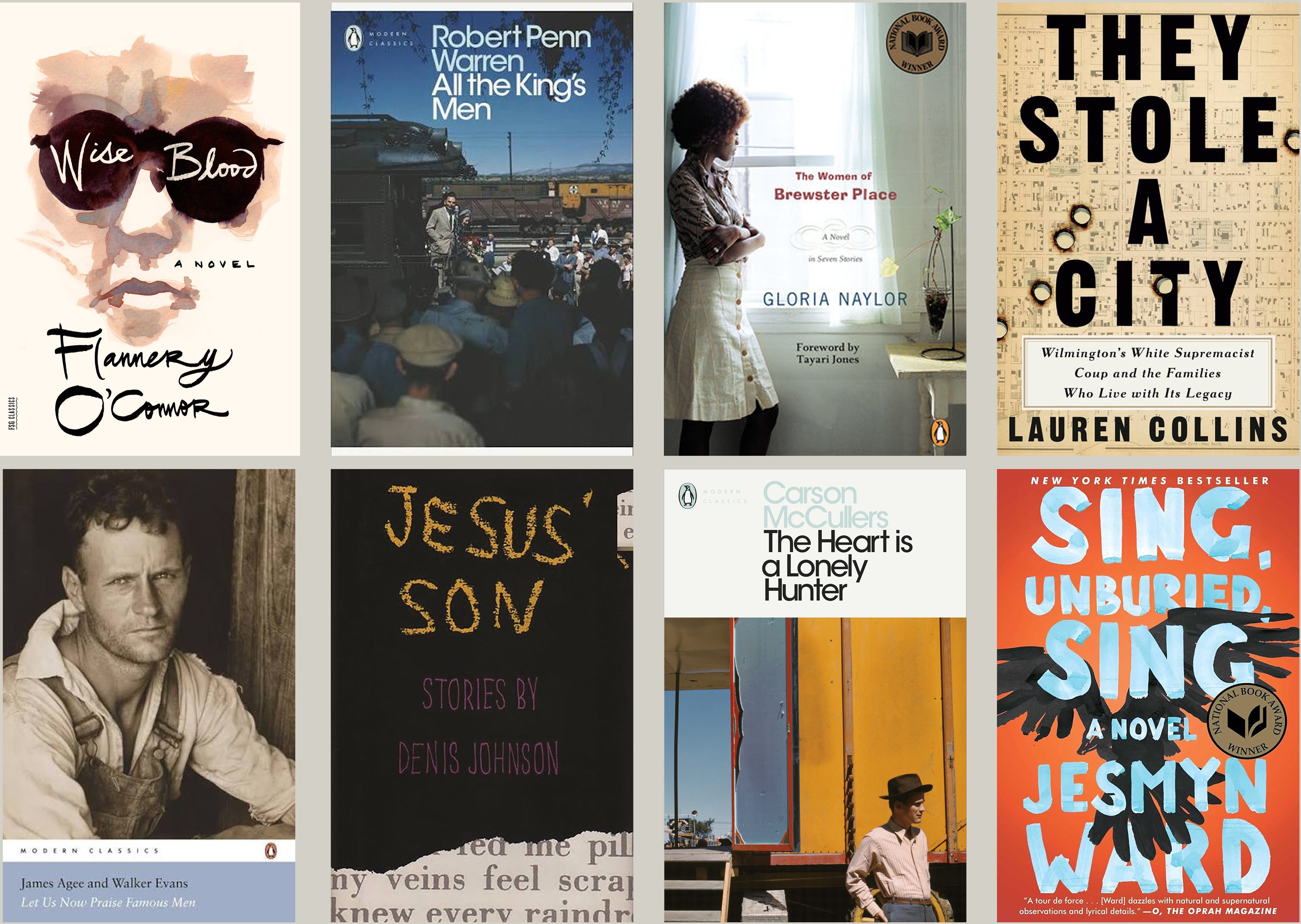
I’m finishing The Complete Stories by Flannery O’Connor in the next day or two and I’m ready to dive into Wise Blood. I’ve been looking forward to reading They Stole A City by Lauren Collins this summer, and it’s the perfect bridge between the Weil in O’Connor, and the American South in O’Connor. I always try to start the holidays with nonfiction because it sets the tone for whatever I’ll be reading over that month-long period. Since my family and I are heading to Florida this year, I want nothing else but to be immersed in American stories, particularly the voices from the American South. What will follow Collins are books I bought but never read, works that have been sitting on my shelves waiting for their time. Let Us Now Praise Famous Men by James Agee. Robert Penn Warren’s All The King’s Men. Jesmyn Ward’s Sing, Unburied, Sing, and Gloria Naylor’s debut novel The Women of Brewster Place. Denis Johnson’s Jesus’ Son and finally The Heart is a Lonely Hunter by Carson McCullers. That’s it folks, book-suitcase is ready (and yes, I’m packing them, I forgot my Kindle on a flight and I never replaced it, I wasn’t a fan to begin with).

VIDEO

IN THE NEWS
Reading Material

David D. Kirkpatrick reports on how Biden’s advisers really felt about the former President’s course of action in the Middle East. Read
Jake Sullivan, Biden’s former national-security adviser, told me that Biden and his advisers had often privately debated ways to restrain Israel. Inside the Oval Office, Sullivan said, “we repeatedly raised and discussed options for withholding weapons,” but, excluding the suspension of one shipment of bombs, “the President always deferred on that decision, because we kept thinking that we were close to getting a deal” for a hostage release and a ceasefire. Sullivan said, “When you look back at it in the cold light of day, the trap in that kind of thinking is easier to recognize.” He added, “I will say straightforwardly—we should have put more pressure on Israel to take a different approach.”
For Harper’s, the writer and lawyer Ann Manov, who left Yale’s humanities grad program to pursue a law degree, asks: “Can the GOP save the humanities?” Read
Ingrid Rojas Contreras writes a sad and moving piece about watching the many fathers die in the hands of the ICE. Read
As a Latina, it is impossible for me not to see my father when I think of Guerrero and Araujo. In them, I see men who wanted nothing but a better life for their children. Families like mine can’t help but feel their families’ pain, and fear for each other and our own.
In the early 1950s, the parents of the Rosenberg boys were accused of spying for the Soviet Union and sentenced to death. Amy Weiss-Meyer meets with the two orphaned brothers to try and understand what happened. Read
Choe Sang-Hun recounts how a North Korean family escaped the world’s harshest lockdown, and set-up their new life in Seoul. Read
Not an article but a poem. In the latest issue of the London Review of Books you’ll find Anne Carson’s “Smile”. Read

THIS WEEK’S ESSAYS
Written Material
“The Church and the Fiction Writer” by Flannery O’Connor. Read
“Goodbye to All That” by Joan Didion. Read
“Specific Objects” by Donald Judd. Read
“Simone Weil” by Susan Sontag. Read
Preface to Simone Weil’s “The Need for Roots” by T.S. Eliot. Read

CURRENTLY AT RUE DE CHABROL
What My Daughter’s Reading

Vita is in the South of France at her grandparent’s house eating peaches in the pool. In a picture my mother-in-law shared with me, I saw her flipping through a book based on the film “The Fox and the Hound,” next to her cousin who was looking through “Astérix” (they’re nine days apart). My mother-in-law has the most beautiful large-format Disney books from the nineties and the girls love looking through them.
What My Husband’s Listening To
“The Real Me”, the Future album that dropped on July 10, 2026.
A Movie I’m Thinking About
“Il Postino” (The Postman), a 1994 film by Michael Radford, it takes place on the Italian island where my husband proposed to me and where we were married.

FINAL POEM
Crossroads in the Past
by John Ashbery
That night the wind stirred in the forsythia bushes,
but it was a wrong one, blowing in the wrong direction.
“That’s silly. How can there be a wrong direction?
‘It bloweth where it listeth,’ as you know, just as we do
when we make love or do something else there are no rules for.”

I tell you, something went wrong there a while back.
Just don’t ask me what it was. Pretend I’ve dropped the subject.
No, now you’ve got me interested, I want to know
exactly what seems wrong to you, how something could

seem wrong to you. In what way do things get to be wrong?
I’m sitting here dialing my cellphone
with one hand, digging at some obscure pebbles with my shovel
with the other. And then something like braids will stand out,

on horsehair cushions. That armchair is really too lugubrious.
We’ve got to change all the furniture, fumigate the house,
talk our relationship back to its beginnings. Say, you know
that’s probably what’s wrong—the beginnings concept, I mean.
I aver there are no beginnings, though there were perhaps some
sometime. We’d stopped, to look at the poster the movie theater

had placed freestanding on the sidewalk. The lobby cards
drew us in. It was afternoon, we found ourselves
sitting at the end of a row in the balcony; the theater was unexpectedly
crowded. That was the day we first realized we didn’t fully
know our names, yours or mine, and we left quietly
amid the gray snow falling. Twilight had already set in.
Loved seeing this ❤️