

The Whip on the Fruit Basket
Plus Aaron Parsley's Pulitzer-winning feature, Douglas Stuart's new short story, Eyal Weizman on Gaza, and Giorgio Agamben on the profane and its daily mystical practice.

In this week’s newsletter: several articles and essays I read this week including Eyal Weizman on the architecture of genocide, Giorgio Agamben on the profane and its daily mystical practice, Aaron Parsley’s Pulitzer-winning feature, and a short story by Douglas Stuart. Plus a visual library and a chronicle I wrote.
Chronicle
The Whip on the Fruit Basket
The vase broke on the fifth try. It was mottled amber with an iridescent embossing of a castle by a lake. It was signed near the foot in cameo Evelina. She knew she would have to hurl it many times against the curb before it shattered into pieces over the gutter. At first, she mounted her arm high above her head, mustered all her force and thrust the vase toward the pavement, but the vase rolled down the street intact. With each throw she lashed out more, aimed more strategically, but it was clear that neither strength nor design would break this vase. When the fifth try came around she lifted the vase in front of her and when her arm was fully stretched she opened her fingers and the vase broke at once into pieces.
We were a standing army on the backstreets of Rio just meters away from home. She collected the pieces, trees and lake shards in one hand, the castle and sky in the other, and with her bare hands placed them on the bottom of a blue plastic bag. There was no blood, she left no evidence of her doing, and on the way back to the house she buried the bag under a small slab of concrete inside an orange construction dump.
“Didn’t I tell you,” she boasted. “It wouldn’t break on the first try.”
Existence as our mother presented it to us was solely spiritual. The magnitude of her imagination led us down ethereal paths where there was no grass on the ground, no shade, no sun. Where all that moved us came with another time. We were surprised by the vase’s resilience that morning, any child witnessing such foresight would have registered what passed as an unusual act, it was odd, but so were a lot of things about my mother. Some mornings she’d wake up and throw away the iris bouquets she had just ordered the day before, other days she’d tell us to undress because our pyjamas needed to be thrown out. Sometimes she’d come into my room and take a mallet to all my cds: Britney Spears, Michael Jackson, Madonna all sat crackled on the carpet while I stared at her walk out with relief.
When she was irritated, or if she’d ever catch my brother and I fighting, it didn’t matter who was right or wrong, she’d bring a whip from the kitchen and with the strength she used to throw that vase she’d draw thin lines of blood and peeling skin around our stomachs, arms, and legs. “Withhold not correction from the child: for it thou beatest him with the rod, he shall not die. Thow shalt beat him with the rod, and shalt deliver his soul from hell.” She repeated this Proverbs so many times.
It was customary to see her planting the perennials just under the trees with the green thorny rods. When they were ready, she’d clip off the leaves and bring them into the kitchen. They lay green, brown, and strong in the same fruit basket she kept mangos and papayas and cashew fruits. Sometimes my brother would break the whip so when she reached to grab it, it was too short. The first few times she turned desperate and was all together done with the impulse, it worked well, but after a while she took to the belt, and then the belt became a household staple. I can still hear those whippings. I hear the whooping sound the leather makes as it pushes through the air until it hits our skin. At times she’d be so overwhelmed she’d lash the belt forward over and over again until it hit whatever it hit. It was savage: two frantic children running around the house trying to find a bunker before she striked. Once, after she hit me on my groin, I stopped seeking refuge around the house, I’d run instead to my room to put on as many layers as I could find. That day something about the whippings changed. I looked at her, into her inflamed eyes, and for the first time felt a pain much greater than the lashings ever did.
Some days, after locking us in our bedrooms for hours after a surge, she would come running to us, arms filled with tenderness. On those nights after dinner we laid next to her in bed, and got to pick a worship song to sing from her book of hymns. The gospel was nothing other than our reward, and the path through which she interacted with us affectionately.
New Books
Why I’m Reading These Books
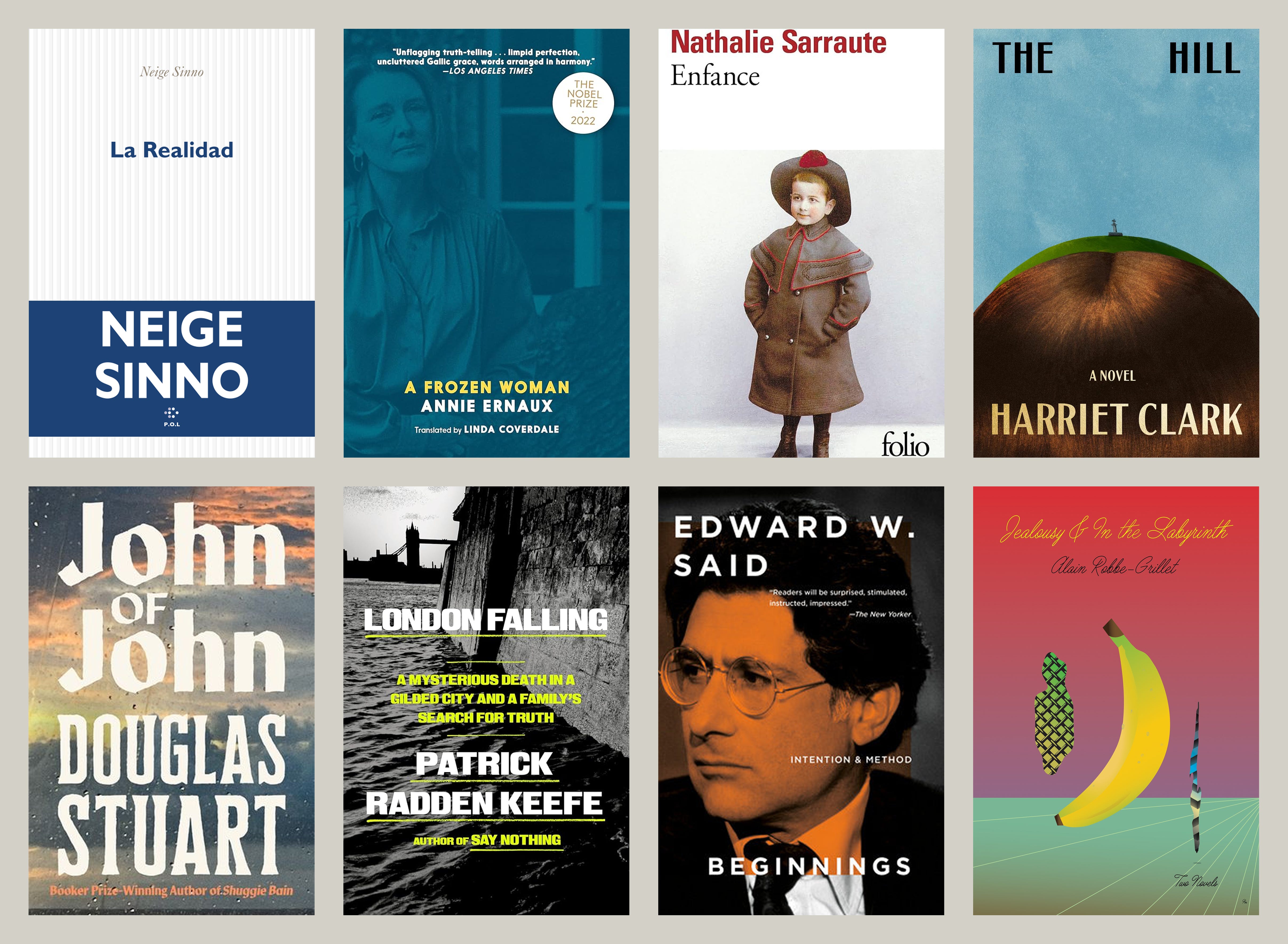
La Realidad by Neige Sinno
Because after reading her first book Sad Tiger I became a committed reader. I like her experimental approach to the autobiographical. This is her second book, it was published last year in France.
A Frozen Woman by Annie Ernaux
Because I listened to a conversation between her and Neige Sinno on the radio and I want to read more from her (I only read The Years). I’m curious about her approach to form.
Childhood by Nathalie Sarraute
Because I’m reading for form and style right now, and Sarraute’s work is essential to this study. She was a founding member of the Nouveau Roman.
The Hill by Harriet Clark
Because recently I’ve read a few reviews of this novel—including ones by James Wood and Hermione Hoby—that made me curious to see how Clark writes about this mother-daughter relationship. I also love reading debut novels.
John of John by Douglas Stuart
Because since Shuggie Bain I read everything he writes.
London Falling by Patrick Radden Keefe
Because I want to see how Patrick Radden Keefe reported on this story. I thought his reporting on the Sackler family was fascinating.
Beginnings by Edward W. Said
Because I’m intrigued by Said’s mind and by his literary criticism, which is much less frequented than his post-colonial studies but just as powerful.
Jealousy by Alain Robbe-Grillet
Because I’m revisiting the Nouveau Roman.
The Visual Library
Kurt Cobain
In light of the New York Times Magazine’s recent compilation of the 30 greatest living American songwriters, I wanted to honor Kurt Cobain. Something In The Way was written entirely by Cobain and was known as his ode to solitude. He wrote All Apologies while listening to The Beatles’ Norwegian Wood on repeat in his apartment in Olympia, Washington. There are three concerts I wish I had been old enough to experience and Nirvana, MTV Unplugged in New York is certainly one of them.


Currently at Rue de Chabrol
Six Articles I Recommend This Week

Eyal Weizman has a brilliant essay out in the London Review of Books about genocide, architecture, and the demolition of Gaza. Read
Aaron Parsley won the Features Writing Pulitzer Prize for his first-person essay about survival which ran in the August 2025 issue of Texas Monthly: “We had spent so many hours on that porch looking out over the yard and to the river below. Now the water splashed against the bottom of its railing. The gravity of our situation didn’t sink in right away, but the facts were clear: We were surrounded by fast-moving floodwater, and we had no way of escaping to higher ground.” Read
To coincide with the launch of Douglas Stuart’s new novel, the New Yorker published his short story A Private View in its April 12 issue. Read
Adam Biles interviews Arundhati Roy at Shakespeare and Company in Paris: “As a child, you’re not supposed to understand why something is happening—why someone is being violent, why, for no fault of yours, you’re getting hit. But I did understand, from a very young age.” Read
What does science have to stay about the state of our attention span? David Adam explains the findings of psychology and neuroscience researchers in the field: “…there is little evidence that the brain’s fundamental ability to concentrate has been impaired. This suggests that if we can shut down the distractions of our environment, it is possible to recover focus.” Read
“Americans must abolish gerontocracy if we are to realize a collective aspiration to social movement and progress, or achieve other important goals such as intergenerational equity and fairer political representation.” In the essay The Old Guard by Samuel Moyn for Harper’s Magazine. Read
Six Essays and Lectures From The Archives

The Islamic City: Historic Myth, Islamic Essence, and Contemporary Relevance by Janet L. Abu-Lughod. Read
Tradition and the Individual Talent by T.S. Eliot. Read
Eating the Other by Bell Hooks. Read
Sculpture in the Expanded Field by Rosalind Krauss. Read
Profanations by Giorgio Agamben. Read
Shall we continue the scientific research? by Alexander Grothendieck. Read
My Morning Read
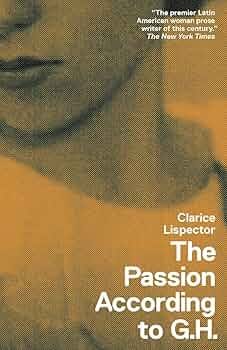
It’s a reread of my favorite Clarice Lispector book The Passion According to G.H.
My Daughter’s Evening Read
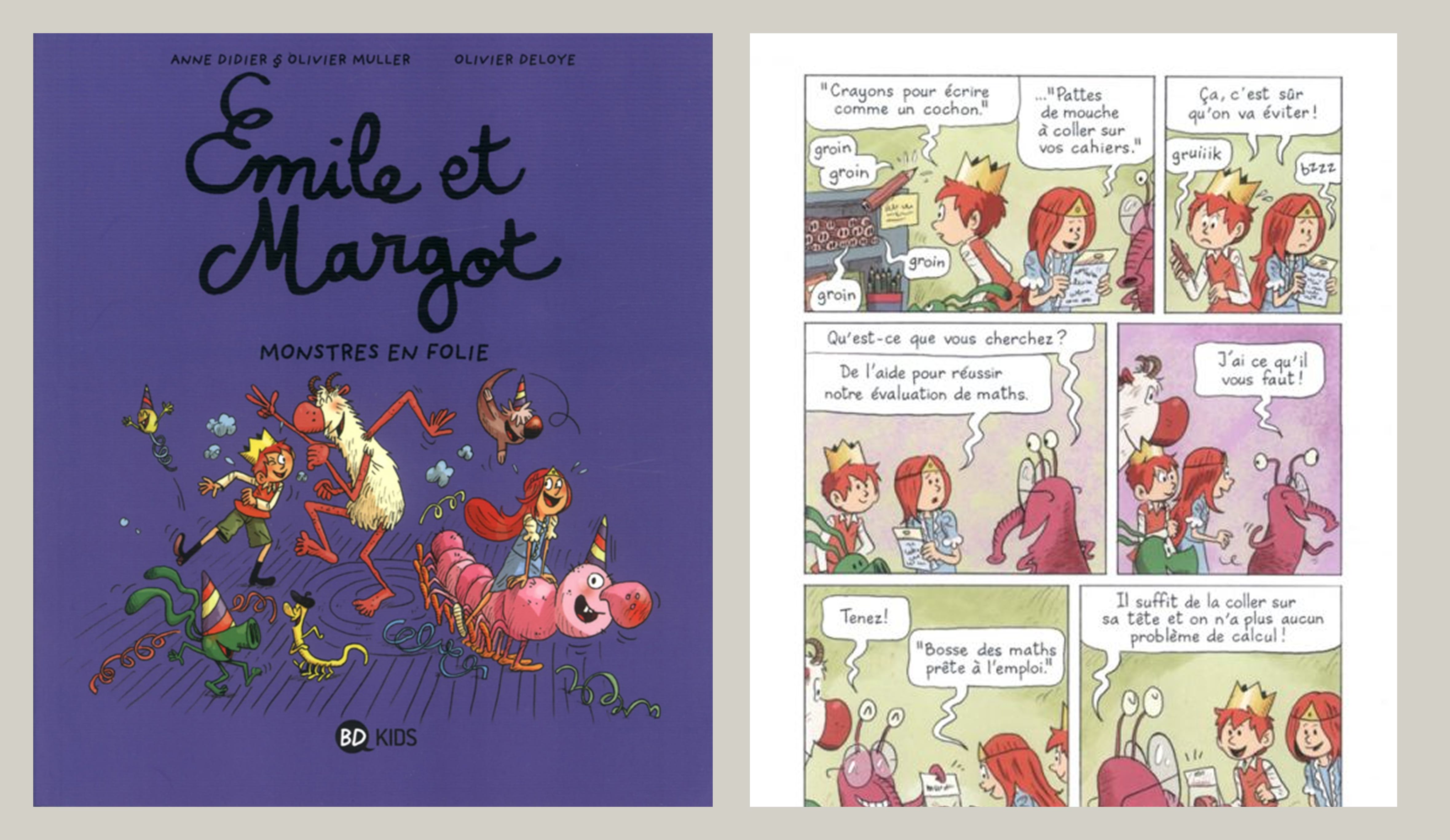
If you’re following along you know I’m having a hard time getting Vita (who will be five this summer) to read as passionately as we’ve been reading up until now. So I was happy and motivated by Ruth Gaskovski’s newsletter this week where she offers more than 100 children’s book recommendations. I’ve started ordering the ones I think Vita could be into, but in the meantime we’re sticking to the only thing she wants to read right now, a French comic book series called Emile et Margot. On that note, this week I’ll take any comic book recommendations written in English.
What My Husband is Listening To
The album Euphoria Bound by Shackleton.
A Movie I’m Thinking About
The full Queen concert at Wembley Stadium in 1986.
A Poem
Calm by Charles Baudelaire
Have patience, O my sorrow, and be still.
You asked for night: it falls: it is here.
A shadowy atmosphere enshrouds the hill,
to some men bringing peace, to others care.
While the vile human multitude
goes to earn remorse, in servile pleasure’s play,
under the lash of joy, the torturer, who
is pitiless, Sadness, come, far away:
Give me your hand. See, where the lost years
lean from the balcony in their outdated gear,
where regret, smiling, surges from the watery deeps.
Underneath some archway, the dying light
sleeps, and, like a long shroud trailing from the East,
listen, dear one, listen to the soft onset of night.